
Best Time to Pour Concrete in Monroe, NC (by Season)
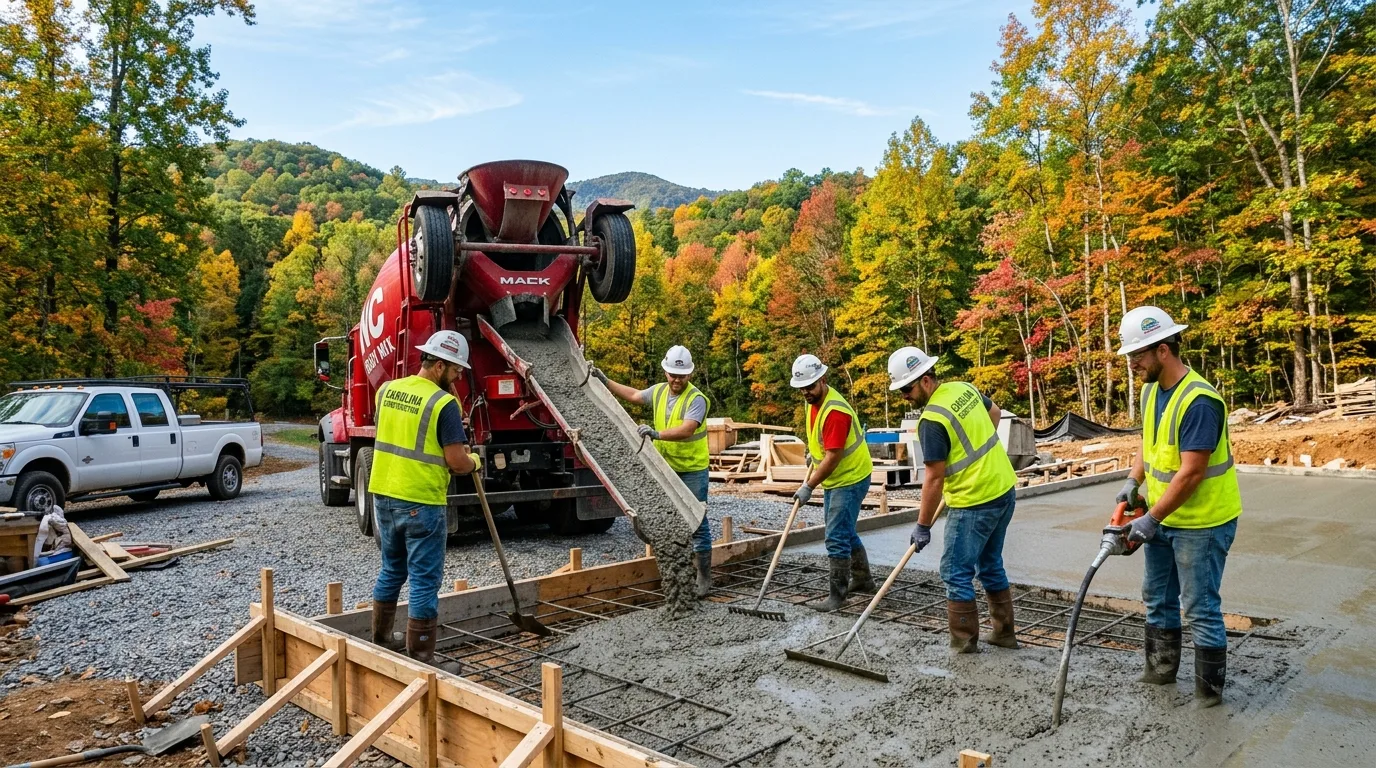
Concrete placement in Monroe, NC is a year-round business — but not every month is equal. Monroe’s humid subtropical climate, with 43 inches of annual rainfall distributed fairly evenly across the year, means that weather windows matter more here than in drier markets. This seasonal guide covers the best months to pour concrete in Monroe, the conditions to avoid, and how experienced Union County contractors plan around local weather patterns.
Schedule Your Monroe Concrete Project
Monroe Concrete Contractors schedules projects around Union County weather conditions for optimal curing. Free estimates. Call (888) 376-0955.
Why Concrete Timing Matters in Monroe, NC
Concrete placement temperature and moisture conditions directly affect how the concrete hydrates and gains strength. Pour in conditions that are too hot and the surface crusts before the interior cures, causing surface cracking. Pour in rain and the mix water content becomes uncontrolled. Pour when temperatures drop below 40°F and hydration slows or stops, producing weak concrete that never reaches design strength.
Monroe’s climate sits in a particularly interesting middle zone: winters are mild enough that concrete can be poured year-round with precautions, but summer heat and humidity create their own set of challenges. Understanding the local seasonal patterns is what separates a Monroe concrete contractor with local experience from one who imports generic scheduling advice.
Spring (March–May): Monroe’s Best Concrete Season
Spring is the premier concrete pouring season in Monroe and Union County. Daytime temperatures typically range 60–75°F in March and April — ideal for concrete placement. Nighttime lows generally stay above 45°F by mid-March, reducing the risk of early frost that can damage fresh concrete.
The main spring challenge is rainfall: March averages around 4 inches of rain in Monroe, and spring storms can develop quickly in the Piedmont. Experienced Monroe contractors monitor forecasts 48–72 hours out and schedule pours on confirmed dry windows. A 4-hour window with no rain is sufficient for most residential slabs.
Practical implication: Monroe homeowners who want spring concrete work should contact contractors by late January or early February. Spring booking calendars fill quickly because contractors from Indian Trail to Marshville all chase the same good-weather windows.
Summer (June–August): Hot and Humid — Manageable with Planning
Monroe summers are warm and humid, with July highs averaging 88–91°F and relative humidity often above 75% during peak afternoon hours. These conditions accelerate concrete set time, which reduces the working window for finishing.
Experienced Monroe concrete contractors adapt in summer by:
- Scheduling pours for early morning (5–7 AM) when temperatures are lowest
- Using set-retarding admixtures to extend working time
- Keeping aggregates and water shaded before mixing
- Applying evaporation retarder to freshly screeded surfaces to prevent surface crusting before finishing
Summer concrete in Monroe is workable for smaller projects — a driveway or patio pour is typically done within 2–3 hours, well within the modified working time. Large commercial pours in summer require more planning and earlier start times.
Plan Your Summer Monroe Concrete Project
We schedule summer pours for optimal early-morning conditions. Call Monroe Concrete Contractors at (888) 376-0955 for a free estimate.
Fall (September–November): Nearly as Good as Spring
September and October are excellent months for concrete placement in Monroe. Temperatures moderate from summer heat and rainfall is typically lower in October than any other month of the year in the Piedmont. Fall pours set and cure without the summer heat stress, and the longer available window between early morning and late afternoon allows more flexibility.
November introduces some caution: nighttime temperatures drop toward the 40s by late November, and a cold snap can push lows to freezing. Contractors working in South Monroe and Northeast Monroe corridors during late November monitor overnight forecasts carefully and use insulating blankets on fresh pours when freezing nights threaten.
The other fall consideration is contractor availability: many homeowners rush concrete projects in September–October before winter, creating booking pressure. Contact Monroe contractors in August to secure a fall slot.
Winter (December–February): Possible, But Requires Precautions
Monroe winters are mild by Southeast standards — January averages lows of 30–33°F, with highs in the 50s. Most years, Monroe sees only a handful of nights below 25°F. This means concrete can be poured year-round with appropriate cold-weather practices.
Winter concrete precautions for Monroe projects:
- Avoid pouring when any 24-hour forecast shows temperatures below 25°F
- Use accelerating admixtures (calcium chloride or non-chloride accelerators) to speed strength gain in cold conditions
- Insulate fresh concrete with blankets when overnight lows fall below 40°F for the first 3 days after placement
- Verify that sub-base soil is not frozen — a frozen sub-base expands when thawed, which can shift fresh concrete during early curing
For most Monroe residential concrete projects — driveways, patios, slabs — winter is a legitimate option when weather windows cooperate. Concrete driveway installations in January–February at below-peak contractor rates are a common cost-saving move for Monroe homeowners who plan ahead.
Frequently Asked Questions
What is the ideal temperature for pouring concrete in Monroe, NC?
The ideal concrete placement temperature in Monroe is 50–80°F ambient air temperature, with concrete mix temperature between 50°F and 90°F. Within this range, hydration proceeds at the intended rate and the finishing window is predictable. Monroe’s spring and fall seasons deliver these conditions most reliably.
Can you pour concrete in Monroe, NC in the winter?
Yes — winter concrete is feasible in Monroe because the climate is mild enough that sustained freezing temperatures are uncommon. The key precaution is avoiding placement when nighttime lows are forecast to drop below 25°F for the first 72 hours after pouring. Professional Monroe contractors use admixtures and insulating blankets to safely extend the pour season into January and February.
Does Monroe’s rain affect concrete curing?
Rain immediately after placement (while concrete is still plastic) dilutes the mix water, weakening the surface. Rain during active finishing ruins the surface texture. However, rain after the concrete has hardened — typically 4–6 hours after placement under Monroe summer conditions — does not harm the concrete and actually aids curing by maintaining moisture. Monroe contractors monitor forecasts carefully and can set up tarps over small pours when a brief shower is possible but expected after placement.
Ready to Schedule Your Monroe Concrete Project?
Monroe Concrete Contractors schedules all projects around Union County weather windows. Free estimates. Call (888) 376-0955.
Related: