
5 Signs Your Monroe Foundation Needs Concrete Repair
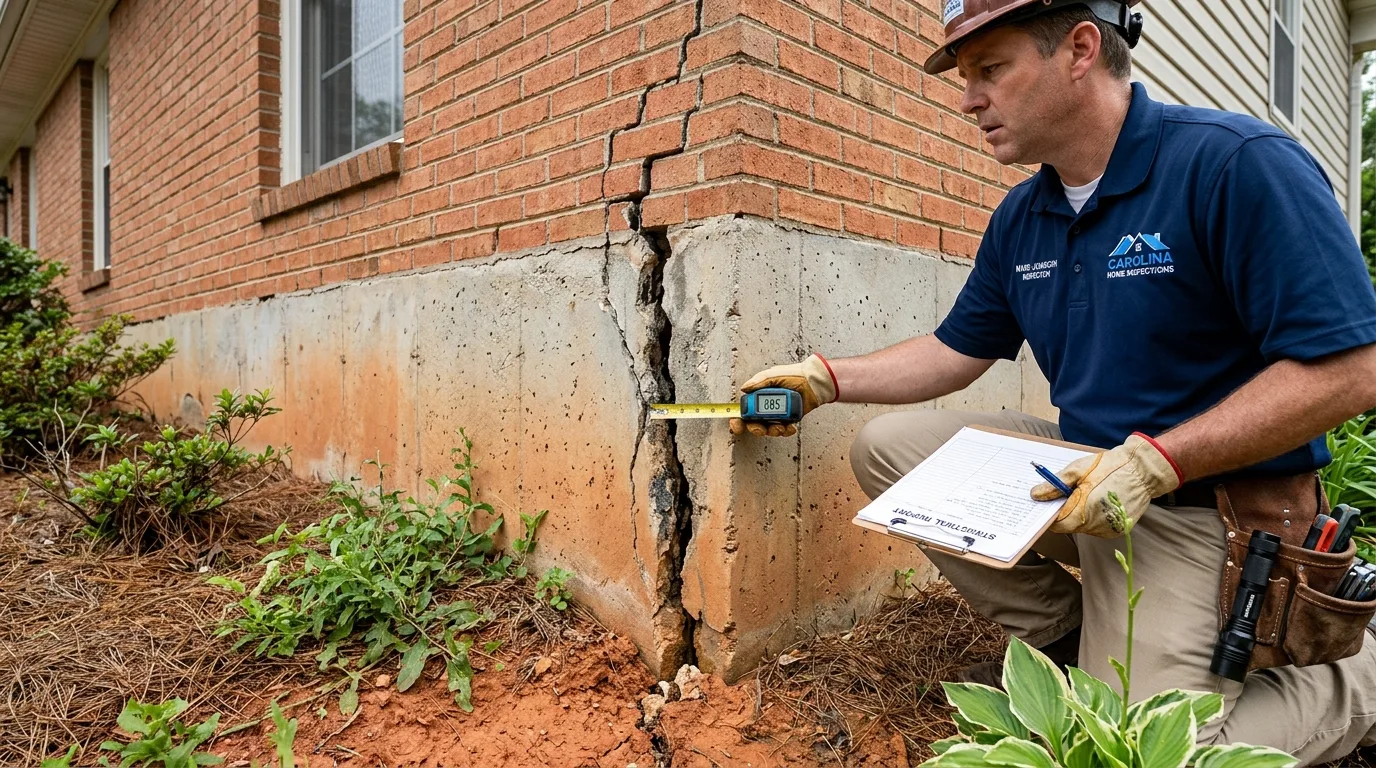
Most Monroe homeowners discover foundation problems at the worst possible time: during a home inspection, when they’re trying to sell, or after moisture intrusion has already caused secondary damage inside the home. Concrete foundation issues in Union County rarely appear overnight — they develop over months or years as Monroe’s expansive Piedmont clay moves beneath the structure. Knowing what to look for means catching damage early, when repair costs are a fraction of what full foundation remediation would cost.
Concerned About Your Monroe Foundation?
Monroe Concrete Contractors provides free foundation assessments for Union County homeowners. Call (888) 376-0955.
Sign 1: Diagonal Cracks Running from Door and Window Corners
The most reliable early warning sign of foundation movement in Monroe homes is diagonal cracking at the corners of doors and window frames. These cracks appear in drywall, plaster, and exterior brick or siding — and they point to differential settlement or heave beneath the concrete foundation.
In Monroe’s South Monroe established neighborhoods and Western Monroe corridor properties, diagonal corner cracks that grew during the wet winter-spring season and appear to stabilize in summer are a textbook sign of active clay movement. The key distinction: hairline cracks (under 1/8 inch) that are stable are often cosmetic. Cracks that widen progressively, appear on both interior and exterior surfaces simultaneously, or run through brick mortar joints indicate structural movement that warrants a professional assessment.
The crack pattern tells the story: a stair-step pattern through brick mortar joints typically indicates uniform settlement (less urgent), while diagonal cracks that skip through brick faces (not just mortar) indicate more forceful movement and more serious concern.
Sign 2: Doors and Windows That Stick Seasonally
Monroe homeowners often notice that doors and windows that operated smoothly when the house was new begin to stick, rub, or fail to latch as the structure ages. This is another expression of foundation movement — as the concrete slab or stem wall shifts, the door and window rough openings shift with it, binding frames that were once plumb and square.
Seasonal sticking — doors that bind in spring and summer (when Monroe’s clay is wet and expanded) but operate smoothly in fall and winter (when clay contracts) — is a strong indicator of ongoing clay movement beneath the foundation. This isn’t cosmetic; it’s your house telling you the foundation is moving with the seasons.
Homes in Monroe’s Northeast corridor near Wingate, where mid-century development used fill over native clay, can show more pronounced seasonal sticking because fill soil settles less predictably than undisturbed clay. If your Monroe home is on fill soil and you’re experiencing seasonal sticking in multiple doors, professional assessment is appropriate.
Sign 3: Visible Foundation Wall Cracks — Especially Horizontal or Stepped
Cracks in the concrete foundation wall itself are more serious than cracks in the interior finishes. Three crack types matter most:
Hairline vertical cracks: Common in poured concrete foundations and usually the result of normal concrete shrinkage during curing. These are generally low-concern if they’re stable, narrow, and not causing moisture infiltration.
Horizontal cracks: The most serious foundation crack type. Horizontal cracking in foundation walls indicates lateral soil pressure exceeding the wall’s design capacity — this can mean the wall is bowing inward. In Monroe, this occurs when heavy clay soil at grade becomes saturated (after a period of heavy rain) and exerts outward pressure against basement or crawl space foundation walls. Horizontal cracks warrant immediate professional evaluation.
Stepped cracks through block or brick foundation: Stair-step cracking through masonry units indicates differential settlement — one part of the foundation is moving more than adjacent sections. Common in Monroe homes built on Union County’s variable clay deposits where bearing conditions change over short distances.
Foundation Cracks in Your Monroe Home?
Free assessment from Monroe Concrete Contractors — we evaluate Union County foundation damage and recommend repair vs. replacement honestly. Call (888) 376-0955.
Sign 4: Water Infiltration After Rain Events
Concrete foundations are not inherently waterproof — they’re permeable, and Monroe’s 43 inches of annual rainfall creates significant hydrostatic pressure against foundation walls that aren’t properly waterproofed and drained. Water infiltration after heavy rain events is a sign that the waterproofing membrane, drainage system, or grading has failed.
Signs of water infiltration in Monroe foundations:
- White crystalline deposits (efflorescence) on foundation walls — indicates water is moving through the concrete and leaving mineral salts behind
- Damp or wet floors after rain events
- Rust stains running from tie holes or form tie locations
- Musty odors in crawl spaces after wet weather
Monroe’s Piedmont clay holds water against foundation walls longer than sandy soils — drainage is slow, and hydrostatic pressure can persist for days after a heavy rain event. Homes in South Monroe’s older neighborhoods where original perimeter drainage tiles have collapsed or clogged over decades are particularly vulnerable to this pattern.
Sign 5: Concrete Slab or Floor That Slopes, Tilts, or Bounces
A concrete slab that was poured level at installation but now slopes toward one corner, tilts, or feels soft underfoot is showing the result of sub-base erosion or clay void formation beneath it. In Monroe, this typically happens when:
- Clay beneath the slab dried out (summer drought) and the slab settled into the void
- Water erosion carved channels under the slab through utility penetrations or cracked control joints
- Tree root growth and decay left voids in the sub-base material
For Monroe homeowners with slab-on-grade construction (common in Western Monroe corridor properties and East Monroe subdivisions built in the 1980s–2000s), a slab that’s tilted or soft in specific zones often points to localized void formation. Concrete leveling (mudjacking or polyurethane injection) is sometimes effective for isolated voids; extensive sub-base failure requires slab removal and replacement.
Frequently Asked Questions
When should I repair vs. replace a concrete foundation in Monroe, NC?
Repair is appropriate for isolated, stable cracks that don’t indicate active structural movement, localized moisture infiltration with intact structural integrity, and minor surface spalling that doesn’t expose reinforcement. Replacement becomes necessary when there’s active structural movement, horizontal foundation wall cracking indicating inward bowing, extensive concrete deterioration from rebar corrosion, or systematic void formation under a slab. Monroe homeowners in Union County should get a licensed contractor’s assessment before committing to either path — the cost difference is significant.
What causes most Monroe foundation problems?
Union County’s expansive Piedmont red clay is the root cause of most Monroe foundation issues. Clay that wasn’t properly managed during original construction — insufficient sub-base depth, inadequate drainage, or improper site grading that directs water toward the foundation — expresses its movement over decades. Most Monroe foundation damage visible today in South Monroe established neighborhoods has been accumulating since original construction 20–40 years ago.
How much does foundation crack repair cost in Monroe, NC?
Minor concrete foundation crack injection (epoxy or polyurethane) typically runs $400–$1,500 for a small number of isolated cracks in Monroe. Larger-scale structural repairs — wall stabilization, pier underpinning, or full crawl space drainage remediation — run $5,000–$30,000+ depending on scope. The earlier foundation issues are caught, the narrower the repair scope and the lower the total cost.
Schedule a Monroe Foundation Assessment
Honest repair vs. replacement recommendations from Monroe Concrete Contractors. Free assessments for all Union County homeowners. Call (888) 376-0955.
Related: